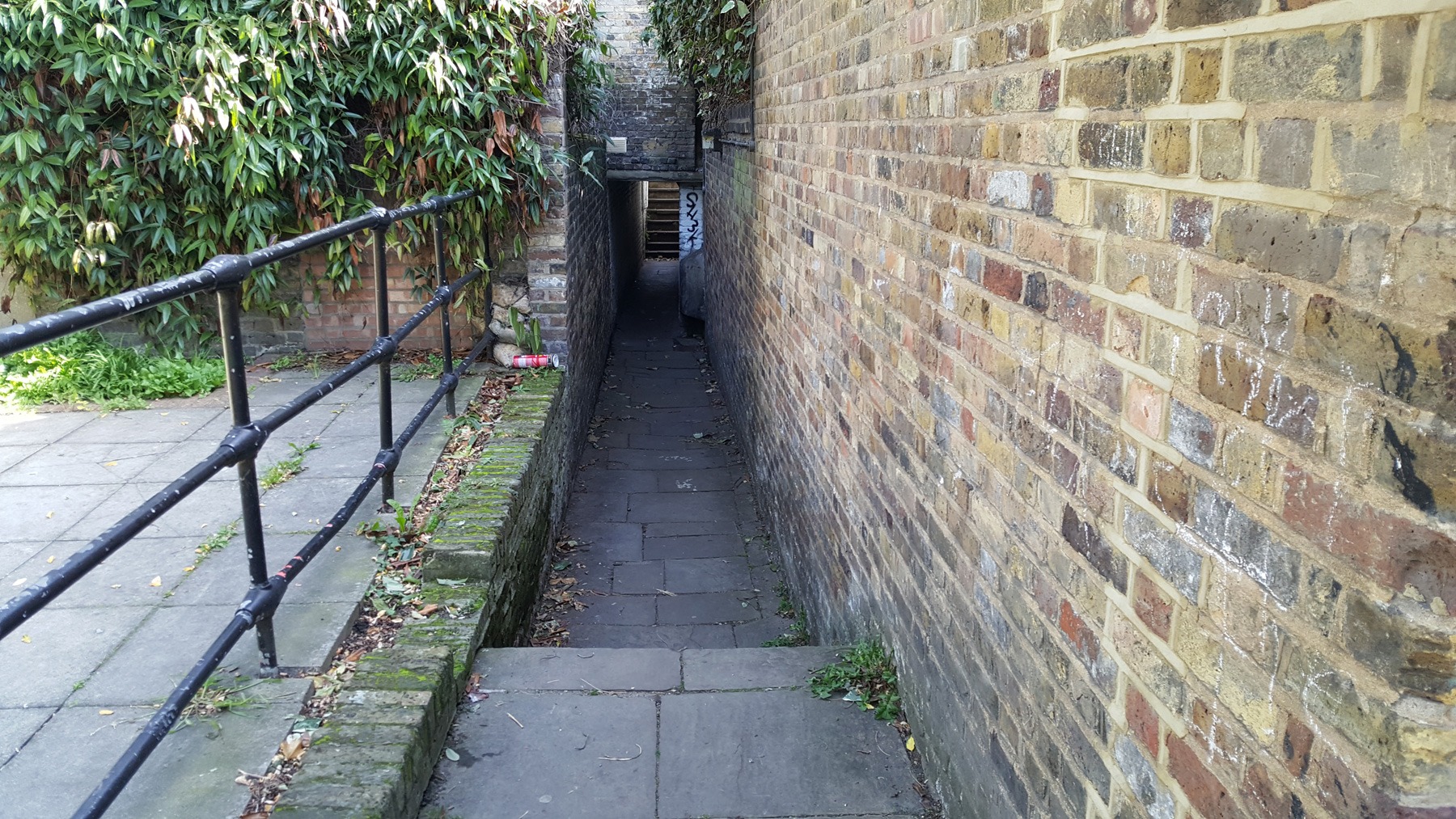
Aysen Dennis loves her flat. Two bedrooms, a neat kitchen-diner, a comfortable residing room, plenty of light, a separate lavatory and bathroom, and a miles broader hallway than withinside the poky thousand-weight Victorian homes that surround her in south London – all for a hundred and ten a week, plus 30 heating and carrier charge. Her flat is heat, and no person can see into it. “I sense unfastened in my home,” she instructed me recently. “I can take off my garments with out annoying approximately curtains.” She nonetheless has the unique Nineteen Sixties kitchen cupboards, miracles of space-saving and smart joinery. South London hipsters would like them.

Dennis isn’t always a hipster. She is 57, single, and has been unemployed for 4 years. She used to paintings in a women’s refuge. Before that, 3 many years ago, she got here to London from Turkey: a leftwing activist fleeing the aftermath of a navy coup, for the duration of which she have been shot at and imcrateed, and a number of her buddies have been finished. After some uneasy years in squats and shared properties – “the husband of my remaining housemate become a racist” – she moved into her flat withinside the spring of 1993.
“I could not trust my luck,” she said. “A council flat in London!” She gestured spherical her residing room, at its cautiously positioned sofas, the wasteland plant life basking on its wide windowsills: “And this type of beneficiant place. It become the primary time I’d had someplace of my own.” Her favorite characteristic of all is the eighth-ground view: north, south and west, an uninterrupted, grey-inexperienced sweep of timber and towers and terraced homes, with an large, nearly seashore sky above. These days, that is the type of vista an increasing number of reserved for thousandaires. After 1 / 4 of a century searching at it, she nonetheless pix the sunsets.
For a person as modestly-off as Dennis to nonetheless have this kind of home, most effective multiple miles from crucial London – you can see it as a lingering vindication of the 20th-century British method to social housing.
For many extra humans, at the left in addition to the right, her flat and the loads of heaps adore it are remnants of a large housing disaster. In January, David Cameron wrote withinside the Sunday Times that council estates epitomise the screw ups of the kingdom: “Some of them, specially the ones constructed simply after the war, are truely entrenching poverty … [On] those so-referred to as sink estates … you are faced via way of means of concrete slabs dropped from on excessive, brutal excessive-upward thrust towers and darkish alleyways which might be a present to delinquents and medicine dealers.” The top minister introduced a scheme to become conscious of the hundred estates maximum “ripe for redevelopment”. “For some, this may genuinely suggest knocking them down and starting once more.”
Dennis’s flat is at the Aylesbury property in Walworth, withinside the London borough of Southwark. The Aylesbury become constructed among 1967 and 1977: a quite overdue addition to Britain’s pioneering and strangely large-scale programme of excessive-upward thrust public housing. The property’s populace has fluctuated since, from approximately 7,000 to possibly 10,000. No one has ever been precisely certain what number of humans stay in its every so often overcrowded flats – which numbered extra than 2,seven hundred on the property’s peak, in five-dozen large homes connected via way of means of raised pedestrian walkways. But for many years, the 60-acre wedge fashioned via way of means of the property has been one in every of the most important housing complexes in western Europe.

The Aylesbury has in all likelihood attracted extra critical traffic than another property withinside the country. There had been leaders of the competition in search of a dystopian instance of presidency failure – Neil Kinnock, Michael Howard, David Cameron and Ed Miliband; individuals of the royal own circle of relatives with a Martian interest approximately structure and poverty – Prince Charles and Prince William, the latter on a geography discipline journey from Eton in 1999; and the maximum remembered vacationer of all, top minister Tony Blair, in 1997 and once more in 2005.
In 1997, Blair selected the “forgotten humans” of the Aylesbury and estates adore it because the challenge of his first set-piece speech as premier. Generalising approximately council housing in nearly precisely the identical phrases that Cameron might appoint 19 years after, Blair warned: “There are estates in which the most important agency is the medicine industry, in which all this is left of the excessive hopes of the postwar planners is derelict concrete.”
For nearly 1/2 of a century, the property has been on the centre of Britain’s unresolved arguments approximately magnificence segregation in cities, approximately whether or not structure can motive social dysfunction, approximately the way to offer houses for the developing tens of thousands and thousands too terrible to shop for or hire privately, and whether or not the kingdom ought to be worried in that project. Now, with the chance of demolition or radical redevelopment looming over the Aylesbury and dozens of different estates, those questions have by no means been extra urgent. Is the Aylesbury, and council estates adore it, an insoluble problem – or do its turbulent beyond and gift include clues approximately the way to residence 21st-century Britain?